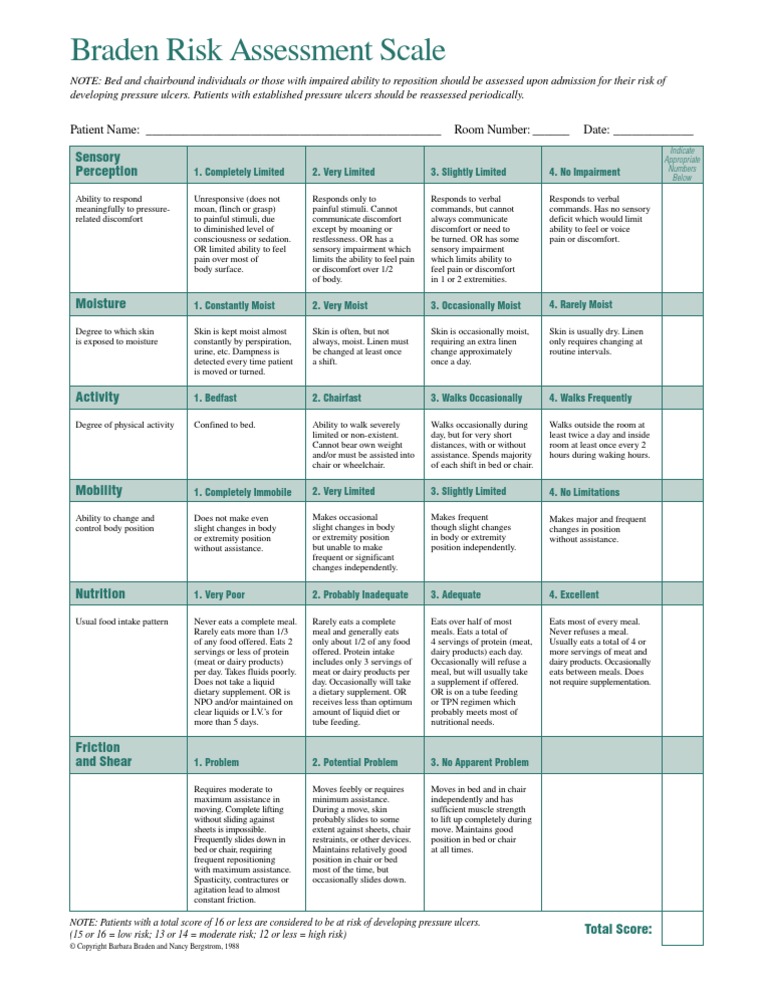
Braden Scale Printable
Braden Scale Printable - Unresponsive (does not moan, flinch or grasp) to painful stimuli, due to diminishing level of consciousness or sedation. Easily fill and download the braden scale chart for free in pdf and word formats. Braden scale must be completed at start of care, resumption of care, recertification, and change in patient condition. The braden scale includes fields that assess sensory perception, moisture levels, activity, mobility, nutrition, and friction or shear. Protocol for braden moisture subscale developed by dr. Assess the risk for developing pressure ulcers with this comprehensive form. The scale provides a numerical score of 1 to 23, with higher scores indicating less risk. Cannot communicate discomfort except by moaning or restlessness. Braden scale for predicting pressure sore risk patient’s name: Completely limited unresponsive (does not moan, flinch, or grasp) to painful. Braden scale for predicting pressure sore risk patient’s name: Completely limited unresponsive (does not moan, flinch, or grasp) to painful. Or limited ability to feel pain over most of body surface. Ability to respond meaningfully to pressure related discomfort. Assess the risk for developing pressure ulcers with this comprehensive form. Braden scale must be completed at start of care, resumption of care, recertification, and change in patient condition. Responds only to painful stimuli. Cannot communicate discomfort except by moaning or restlessness. Home health vna standard of care: Sensory perception, moisture, activity, mobility, nutrition, and friction/shear. Easily fill and download the braden scale chart for free in pdf and word formats. Cannot communicate discomfort except by moaning or restlessness. Ability to respond meaningfully to pressure related discomfort. The braden scale for predicting pressure sore risk assesses six areas of risk: Sensory perception, moisture, activity, mobility, nutrition, and friction/shear. Sensory perception, moisture, activity, mobility, nutrition, and friction/shear. Unresponsive (does not moan, flinch or grasp) to painful stimuli, due to diminishing level of consciousness or sedation. The braden scale includes fields that assess sensory perception, moisture levels, activity, mobility, nutrition, and friction or shear. Unresponsive (does not moan flinch or grasp) to painful stimuli, due to diminished level of consciousness. Ability to respond meaningfully to pressure related discomfort. Sensory perception, moisture, activity, mobility, nutrition, and friction/shear. Total score 9 high risk: The braden scale for predicting pressure sore risk assesses six areas of risk: Responds only to painful stimuli. Assess the risk for developing pressure ulcers with this comprehensive form. Braden scale for predicting pressure ulcer risk category i (stage i) category ii (stage ii) category iii (stage iii) category iv (stage iv) unclassified (unstageable) suspected deep tissue injury. Easily fill and download the braden scale chart for free in pdf and word formats. The braden scale includes fields. Braden scale must be completed at start of care, resumption of care, recertification, and change in patient condition. Easily fill and download the braden scale chart for free in pdf and word formats. Or limited ability to feel pain over most of body surface. The scale provides a numerical score of 1 to 23, with higher scores indicating less risk.. Barbara braden and nancy bergstrom. Ability to respond meaningfully to pressure related discomfort. The braden scale for predicting pressure sore risk assesses six areas of risk: Unresponsive (does not moan, flinch or grasp) to painful stimuli, due to diminishing level of consciousness or sedation. Each field has specific criteria that guide the evaluator in making accurate assessments. Braden scale for predicting pressure ulcer risk category i (stage i) category ii (stage ii) category iii (stage iii) category iv (stage iv) unclassified (unstageable) suspected deep tissue injury. Unresponsive (does not moan, flinch or grasp) to painful stimuli, due to diminishing level of consciousness or sedation. Completely limited unresponsive (does not moan, flinch, or grasp) to painful. Responds only. Braden scale must be completed at start of care, resumption of care, recertification, and change in patient condition. Or limited ability to feel pain over most of body surface. Braden scale for predicting pressure sore risk patient’s name: Each field has specific criteria that guide the evaluator in making accurate assessments. Ability to respond meaningfully to pressure related discomfort. Sensory perception, moisture, activity, mobility, nutrition, and friction/shear. Each field has specific criteria that guide the evaluator in making accurate assessments. Completely limited unresponsive (does not moan, flinch, or grasp) to painful. The braden scale includes fields that assess sensory perception, moisture levels, activity, mobility, nutrition, and friction or shear. The braden scale for predicting pressure sore risk assesses six. Barbara braden and nancy bergstrom. Completely limited unresponsive (does not moan, flinch, or grasp) to painful. Braden scale must be completed at start of care, resumption of care, recertification, and change in patient condition. Sensory perception, moisture, activity, mobility, nutrition, and friction/shear. Each field has specific criteria that guide the evaluator in making accurate assessments. Completely limited unresponsive (does not moan, flinch, or grasp) to painful. Easily fill and download the braden scale chart for free in pdf and word formats. The scale provides a numerical score of 1 to 23, with higher scores indicating less risk. Each field has specific criteria that guide the evaluator in making accurate assessments. Ability to respond meaningfully to pressure related discomfort. The braden scale includes fields that assess sensory perception, moisture levels, activity, mobility, nutrition, and friction or shear. Unresponsive (does not moan, flinch or grasp) to painful stimuli, due to diminishing level of consciousness or sedation. Braden scale for predicting pressure sore risk patient’s name: Assess the risk for developing pressure ulcers with this comprehensive form. The braden scale for predicting pressure sore risk assesses six areas of risk: Responds only to painful stimuli. Braden scale must be completed at start of care, resumption of care, recertification, and change in patient condition. Protocol for braden moisture subscale developed by dr. Or limited ability to feel pain over most of body surface. Home health vna standard of care: Total score 9 high risk:
Printable Braden Scale
Braden Scale Eating Pain
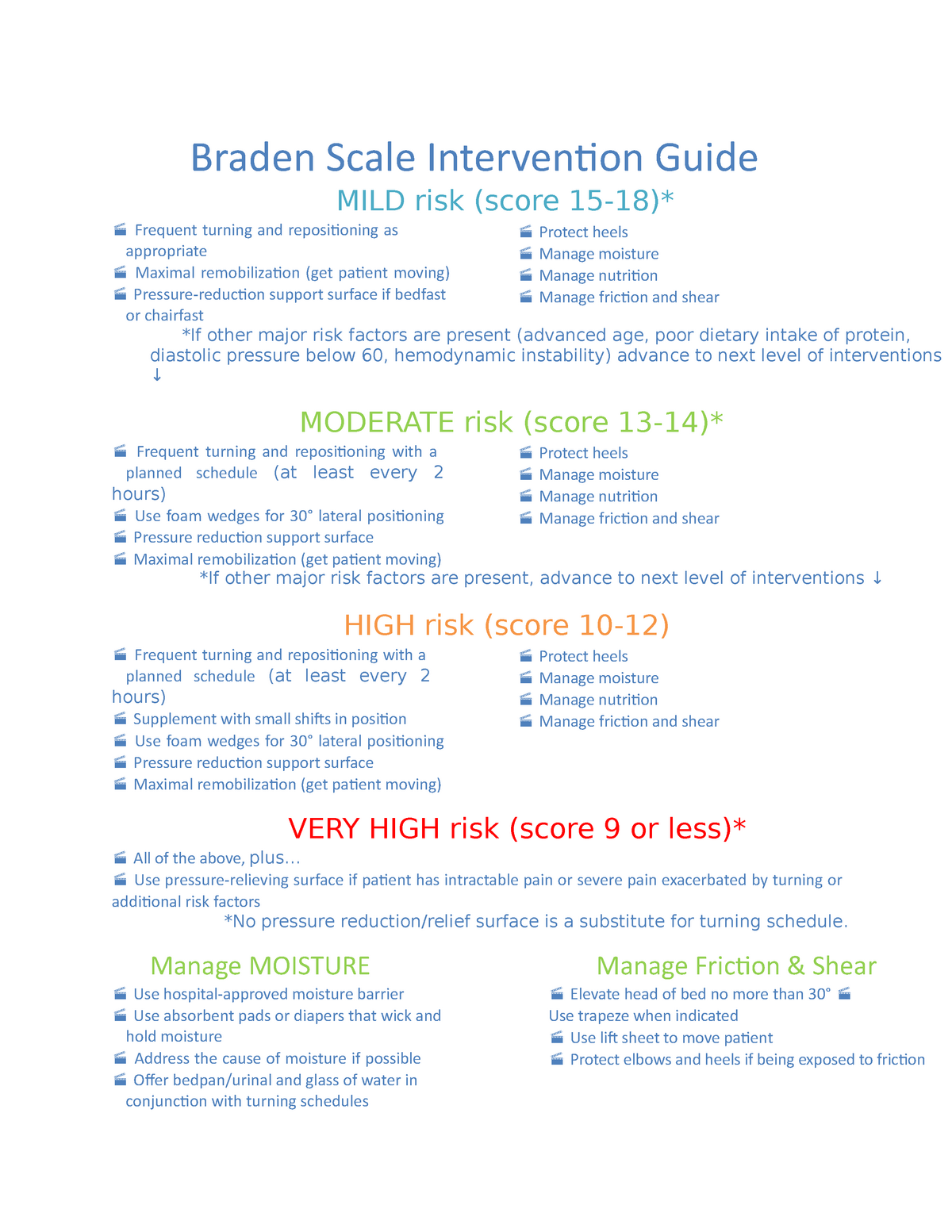
Printable Braden Scale With Interventions
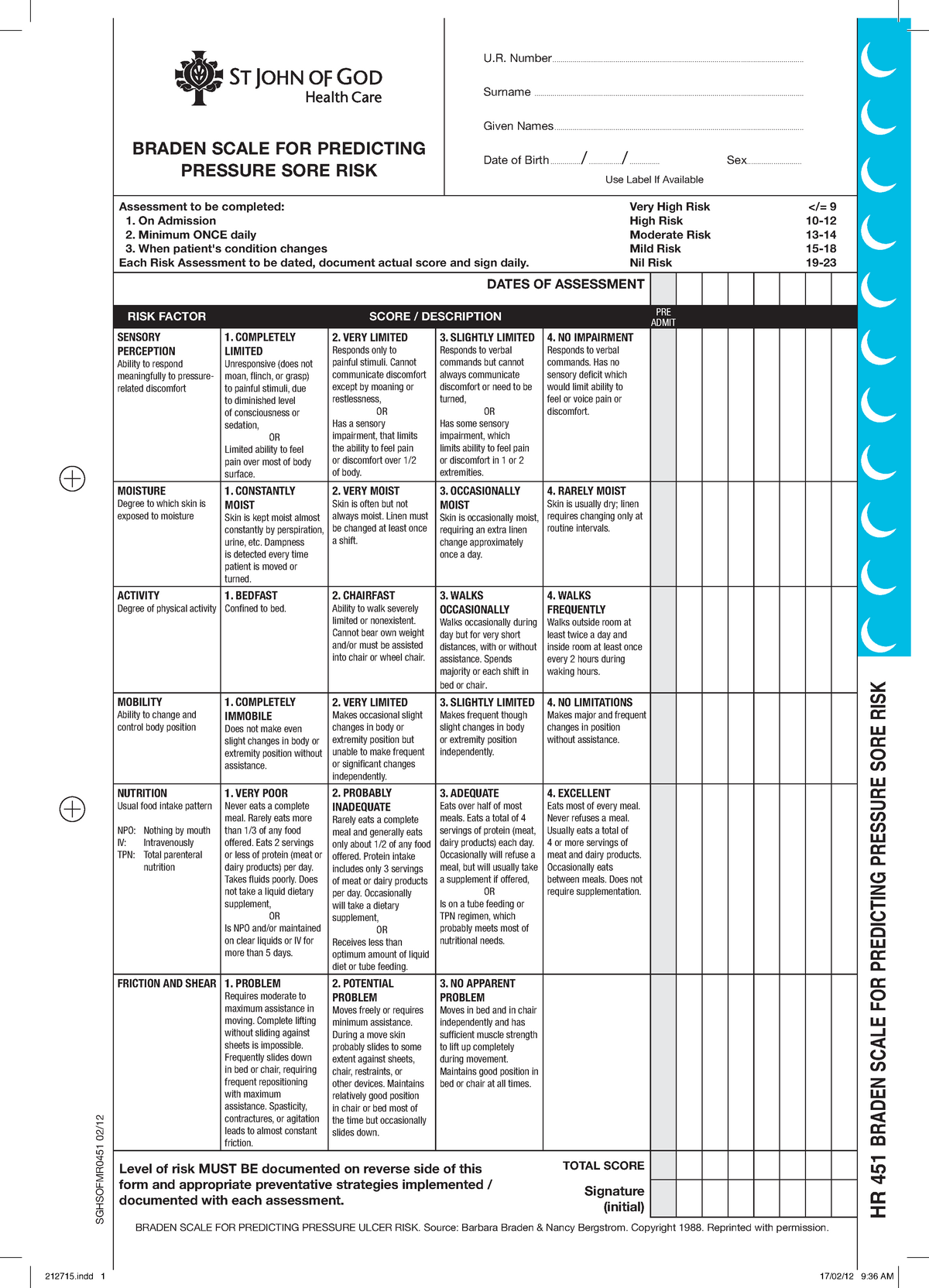
Printable Braden Scale Assessment
Braden Scale Eating Pain

Braden Scale Pdf Fill Online, Printable, Fillable, Blank pdfFiller
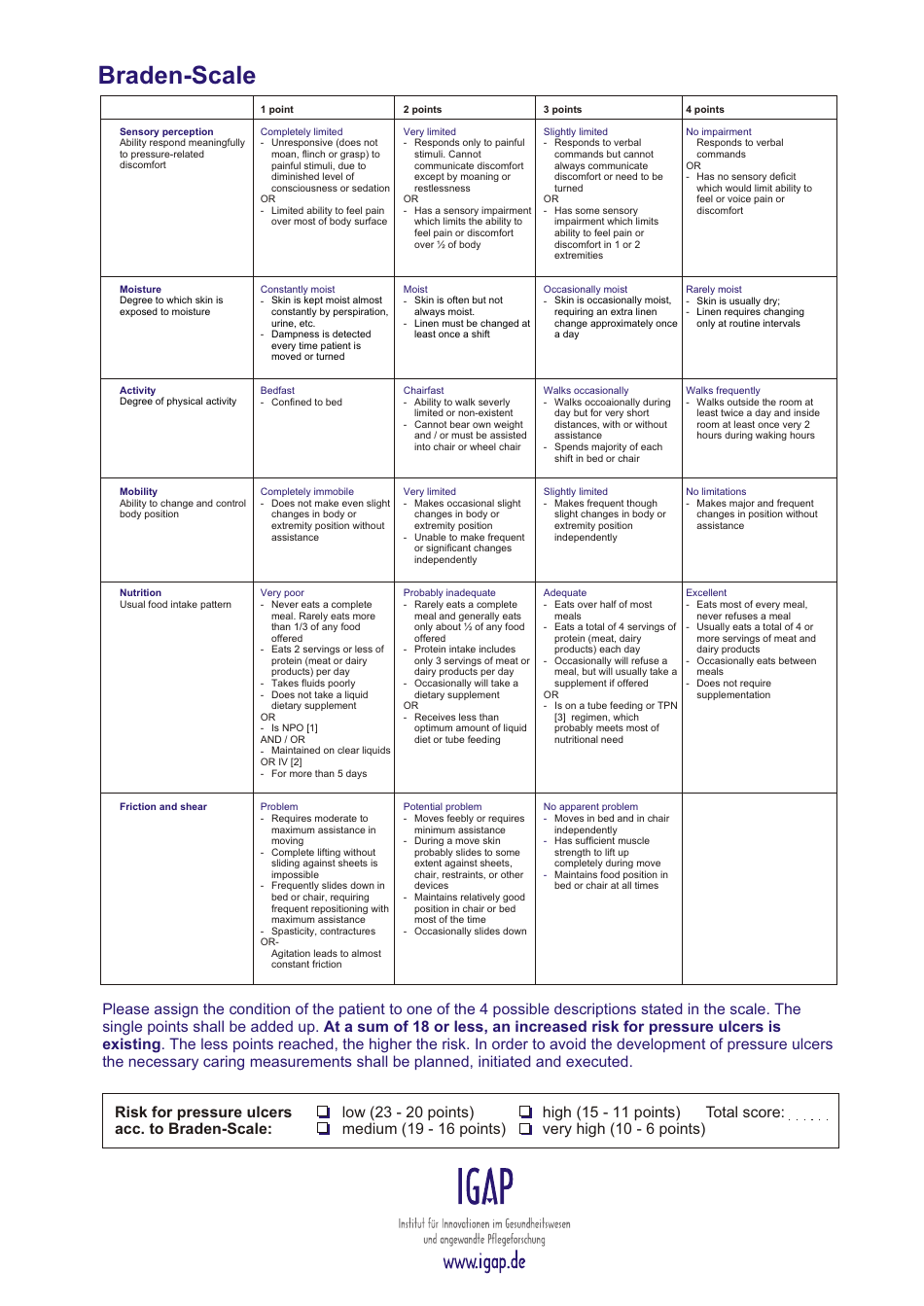
Braden Scale Printable
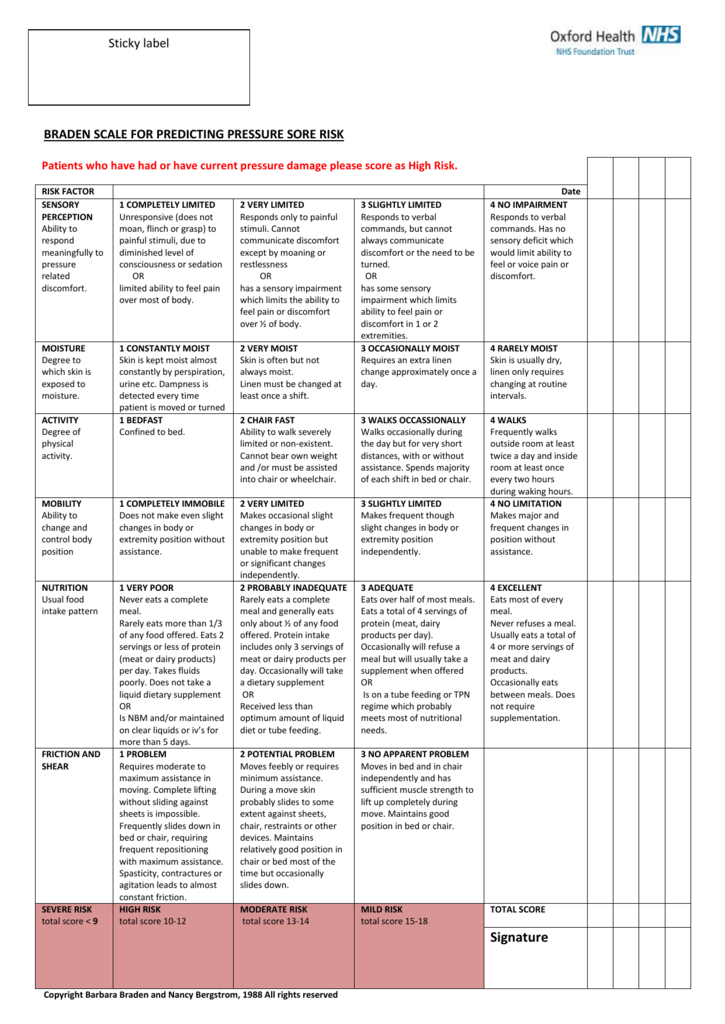
Braden Scale Printable

Printable Braden Scale
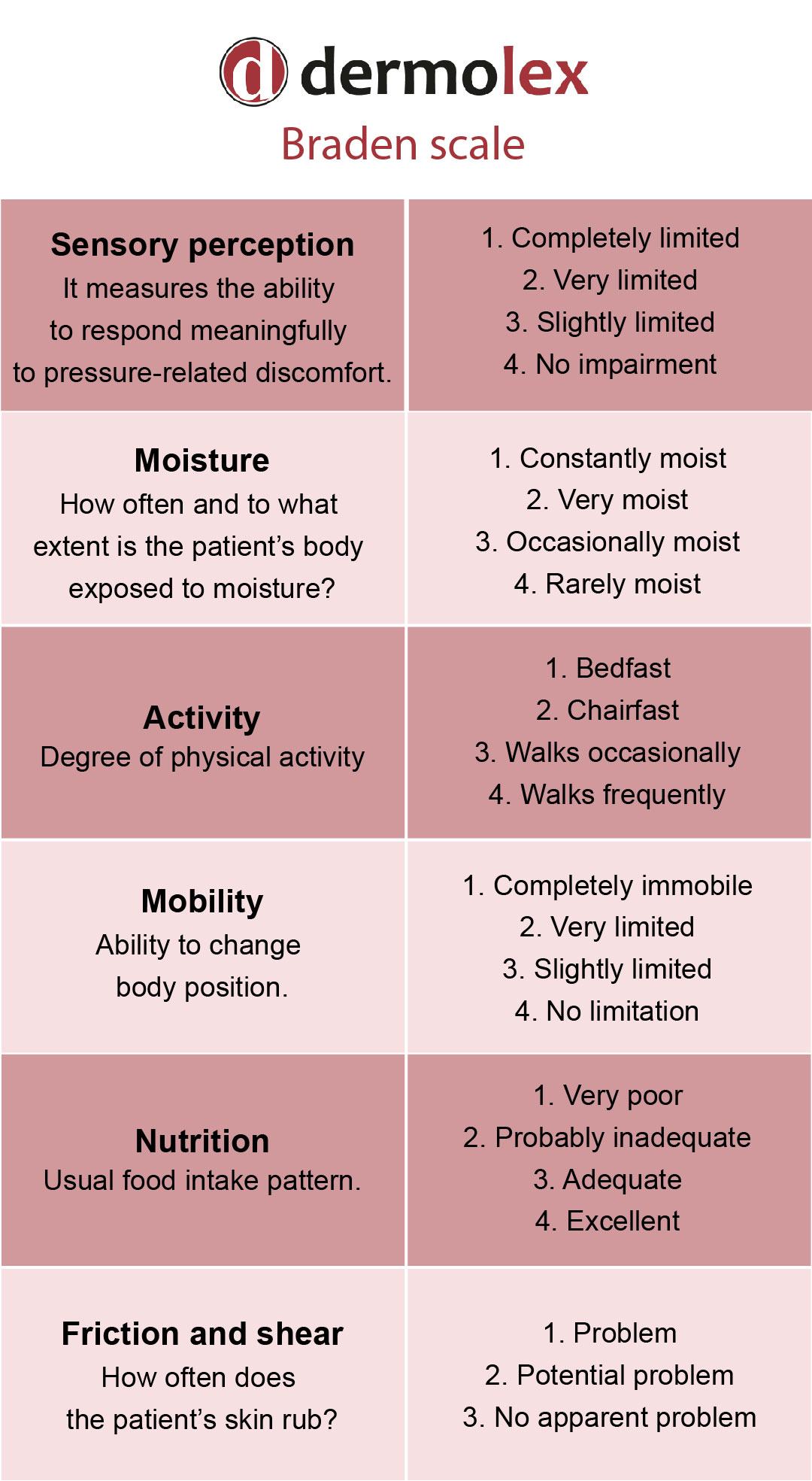
Braden Scale Printable
Unresponsive (Does Not Moan Flinch Or Grasp) To Painful Stimuli, Due To Diminished Level Of Consciousness Or Sedation Or
Cannot Communicate Discomfort Except By Moaning Or Restlessness.
Barbara Braden And Nancy Bergstrom.
Sensory Perception, Moisture, Activity, Mobility, Nutrition, And Friction/Shear.
Related Post: